Xiaomi is making another aggressive play for the mid-range crown. Positioned as an everyday workhorse, the new Redmi Note 15 Pro+ 5G pairs a massive battery and a gorgeous display with a heavy-hitting camera sensor. Squaring up against popular devices like the Google Pixel 9a, this phone is walking into a highly competitive arena. So, does the successor to the Note 14 Pro+ actually deliver?
Pricing and What’s in the Box
Officially hitting the European market at a starting MSRP of €499 for the 256GB model and €529 for the 512GB version, the street price tells a completely different story. Since the phone quietly landed on store shelves late last year, you can already snag the high-capacity variant for just under €400 at select retailers.
Unboxing the device is a pretty bare-bones experience. You get the phone, some standard paperwork, a USB-A to USB-C cable, and a basic silicone case. A screen protector is pre-installed right out of the factory, but you’ll have to shell out an extra €40 if you want the official charging brick.
Faux Leather and Solid Durability
Aesthetically, the phone borrows heavily from its predecessor. The version we tested features a faux leather back panel that provides a fantastic, soft-touch grip. The rest of the design leans into the unmistakable 2026 trend of flat sides and a flat screen. It’s a bit generic, sure, but the build quality is solid. The device measures 163.3 by 78.3 millimeters and sits right around 8.2 to 8.5 millimeters thick. Tipping the scales at 207 grams, it has some heft to it, though it’s still much more pocketable than something like an iPhone Pro Max.
You are getting an all-plastic frame and back, which is slightly disappointing when in-house rivals like the Poco F8 Pro offer a premium metallic tactile experience for the exact same money. Where Xiaomi makes up for the plastic is in sheer durability. Armed with an IP68/IP69K rating, this device is completely sealed against dust, survives submersion in 1.5 meters of water, and can even brush off high-pressure water jets.
A Premium Display Experience
While industry flagships are currently shrinking, Xiaomi went in the opposite direction. The screen has grown to a massive 6.83-inch AMOLED panel, dwarfing the Pixel 9a’s 6.3-inch display and ditching Google’s noticeably chunky bezels for a sleek, modern look. The glass itself features a quad-curve design, meaning it gently slopes on all four edges. It might not be for everyone, but it feels incredibly smooth in hand.
The specs here are basically flagship-tier. You get a crisp 2772 x 1280 resolution, 12-bit color depth, HDR10, and an adaptive 120Hz refresh rate that handles scrolling effortlessly. Xiaomi advertises a blinding peak brightness of 3,200 nits. You’ll likely only hit that ceiling while watching HDR video, but we measured a very robust 1,770 nits on a full white screen. Taking this phone out into direct sunlight isn’t an issue at all. Underneath that bright panel is a fast, highly reliable optical fingerprint scanner.
There is one weird quirk regarding the “Always-on” display, however. The feature feels completely half-baked. If you get a notification, the screen wakes up for about 10 seconds before going entirely dark again. Calling it “always-on” is a stretch, especially since Xiaomi stripped out the persistent display options found on their higher-end models.
Performance and Battery
Under the hood, the Note 15 Pro+ runs on the 4nm Qualcomm Snapdragon 7s Gen 4. It’s a capable mid-range octa-core setup, packing two high-performance Cortex-A720 cores alongside an Adreno 810 GPU. Our specific unit pairs that chip with 12GB of RAM and 512GB of storage, though base models drop the RAM to 8GB.
Day-to-day navigation is snappy and responsive. You might run into a tiny micro-stutter every once in a while, but it barely impacts the overall experience. That being said, if raw processing horsepower is your main priority, this silicon falls noticeably behind identically priced competitors like the Xiaomi 15T or the Honor 400 Pro.
Battery life is where this phone absolutely obliterates the competition. Xiaomi packed in a gargantuan 6500 mAh battery capable of 100W wired charging. Compare that to the Pixel 9a’s 5100 mAh cell and sluggish 23W charging speeds, and it’s not even a fair fight.
The Camera Setup
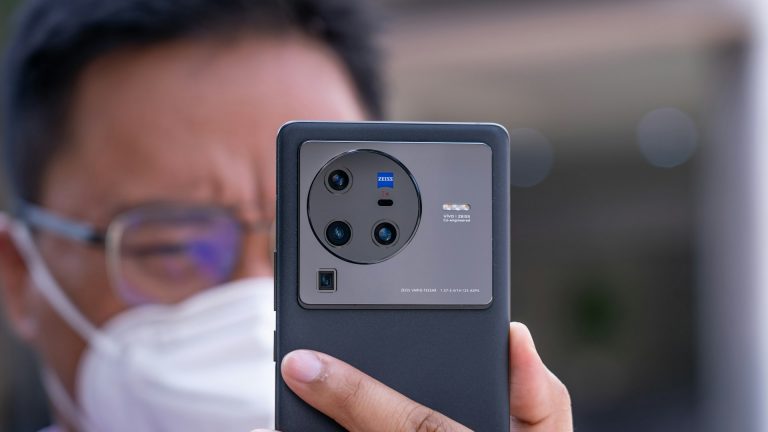
The photography experience is essentially a tale of two lenses. The undisputed star of the show is the 200MP main camera. Backed by optical image stabilization, phase-detection autofocus, and a wide f/1.7 aperture, the massive 1/1.4-inch sensor consistently pulls in great shots.
Unfortunately, the secondary camera is a major letdown. Xiaomi bolted on an 8MP ultra-wide sensor that feels like a total afterthought. It struggles to capture fine detail and simply doesn’t perform well in most lighting conditions. Furthermore, there’s no dedicated telephoto lens on board—a feature that is slowly becoming standard on other devices in this price bracket.
About the Author