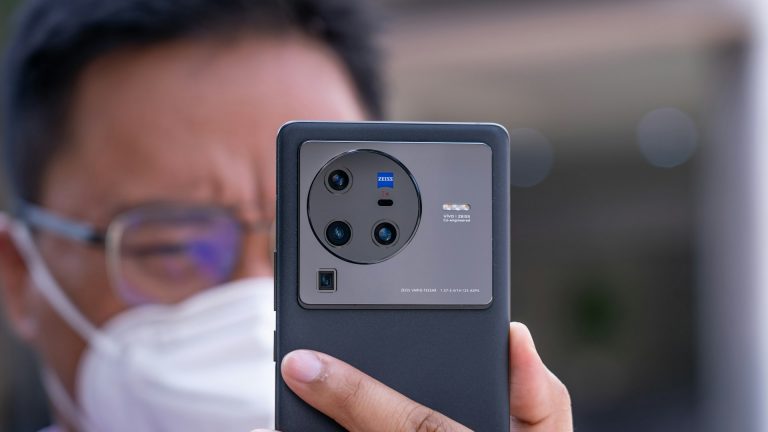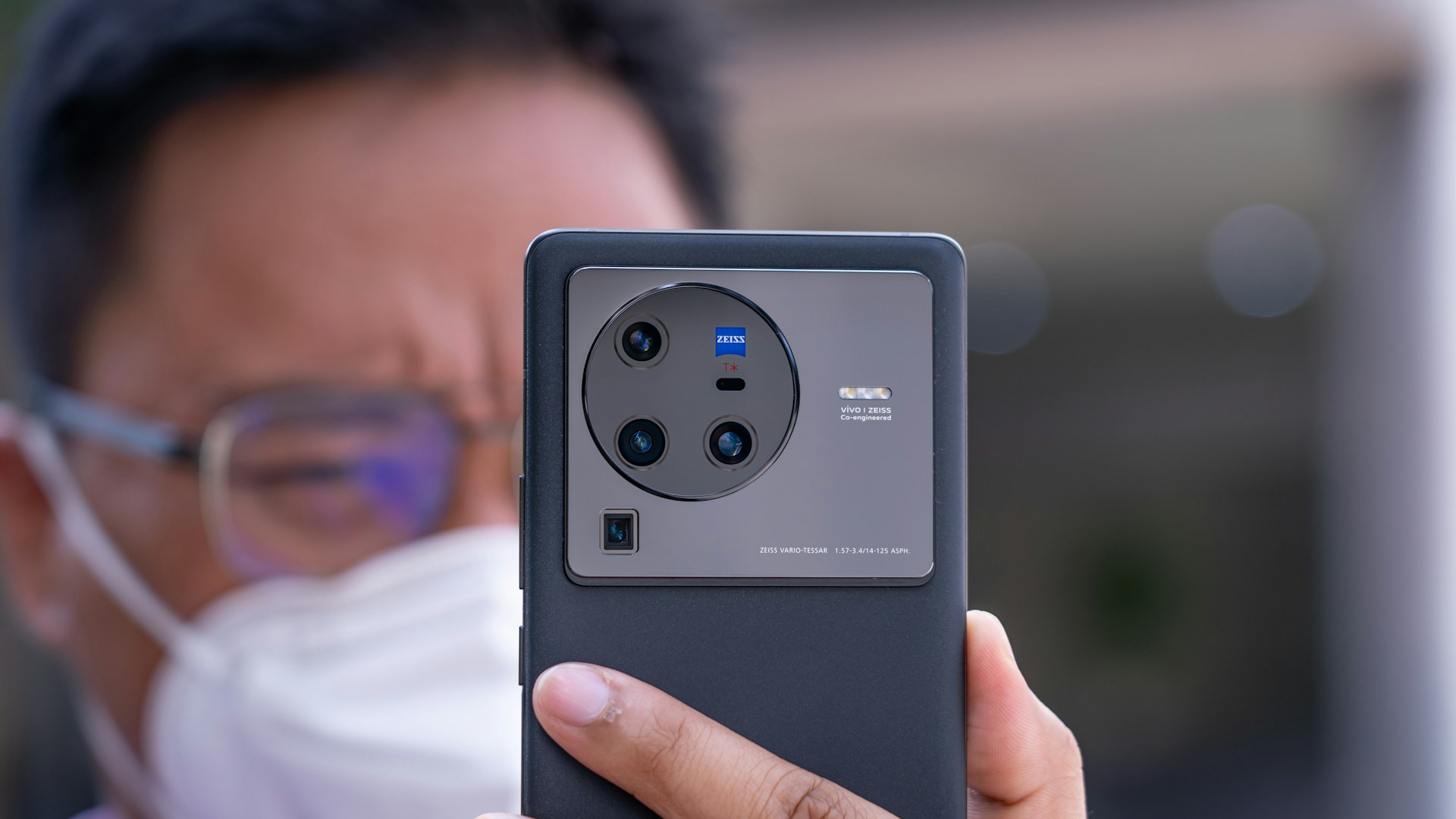
The Vivo X200 Ultra isn’t just another camera phone. One look at this behemoth and you immediately know exactly what it’s all about. It sports a camera bump so massive and protruding that quite literally everyone who picked up our review unit commented on it instantly.
But there’s a method to this madness. What’s hiding inside that giant enclosure is Vivo’s radical rethink of how a smartphone camera system should actually function. Rather than compromising on the ultra-wide shooter, they’ve engineered it to go toe-to-toe with the primary sensor in terms of pure quality. And speaking of the main camera, Vivo is asking a very valid question: why is 24mm the default on almost every flagship? Human vision doesn’t naturally perceive the world that wide. When photographers want to shoot sweeping landscapes, they reach for a dedicated ultra-wide anyway. So, Vivo slapped a 35mm lens on the main camera. It’s a bold design choice that results in a highly unique piece of hardware, easily claiming the title of the ultimate mobile camera of 2025.
Oh, and as a kicker? The X200 Ultra boasts the absolute best battery life of any device we’ve tested in the last two years.
The Ergonomic Elephant in the Room
As thrilled as we are with the imaging capabilities, the X200 Ultra’s sheer bulk means it absolutely isn’t for everyone. Vivo seems acutely aware of this niche appeal, which is likely why they have zero plans to release it in Western markets.
We actually broke out the calipers, and the camera island alone is thicker than the entire chassis of a Galaxy S25 Edge. Because of that supersized array, the device is ridiculously top-heavy. Clocking in at nearly 230 grams, it’s heavier than the X200 Pro, but it’s not the total weight that’s the issue—it’s how it’s distributed. The center of gravity is so skewed that I nearly dropped the phone on multiple occasions while just trying to adjust my grip.
Handling quirks aside, the build quality is undeniably premium. You get flat sides and a mostly flat display with a very subtle edge taper. Vivo also took a page out of Apple’s playbook by including a dedicated camera shutter button. It features the same capacitive touch sensitivity as the iPhone’s Camera Control, letting you swipe across the button to smoothly zoom in and out.
The unboxing experience is surprisingly generous, too. Vivo throws in a case, a cable, and a 90W charging brick. Just keep in mind that this relies on proprietary charging tech, so plugging it into a random Anker USB-C PD charger won’t net you those peak speeds. On the display front, our lab tests show a solid bump in peak brightness over the X200 Pro. Oddly enough, the minimum brightness doesn’t get nearly dim enough, which makes late-night doomscrolling a bit harsh on the retinas. Biometrics are handled by an ultrasonic in-display fingerprint reader that is blistering fast and highly accurate.
| Pros | Cons |
| Industry-leading ultra-wide camera | Extremely bulky, top-heavy design |
| Innovative 35mm main lens | Minimum screen brightness is too high |
| Incredible battery life & 90W charger included | No official global availability |
Pivoting to the Foldables: The X Fold 6 Leak
While the X200 Ultra is pushing the boundaries of what a slab phone can do, Vivo is simultaneously gearing up to refresh its foldable lineup. Just two days ahead of the official June 26 launch, Vivo dropped a flurry of teasers on Weibo that fill in some crucial blanks regarding the upcoming X Fold 6. And if the accompanying retail leaks are accurate, we are looking at a wild shift in strategy.
Vivo confirmed the X Fold 6 will be powered by a MediaTek Dimensity 9500 “Super Edition.” The company is aggressively touting the chip’s efficiency, claiming a 10% drop in power consumption when running their Atomic Workbench multi-window mode, alongside a 20% speed bump for AI-driven text summaries and queries. They also narrowed down the battery metrics, promising a highly specific 9.86 hours of continuous heavy-load usage.
Durability is getting a quiet but necessary upgrade. Vivo officially confirmed an IP5X dust resistance rating, complementing the already expected IPX8 and IPX9 water protection. The chassis utilizes their second-generation custom protective glass on the exterior, paired with a thin, flexible UTG (Ultra Thin Glass) layer for the folding inner display.
The camera system on the Fold 6 isn’t slouching either, packing a 1/1.95-inch sensor for the periscope telephoto lens and supporting 4K 60fps Dolby Vision recording. If you want to push the optics even further, Vivo is offering an optional Zeiss Extender G2. It weighs 153g and, as noted in the fine print, is sold entirely separately.
The Memory Crisis Hits the Wallet
The tech inside the X Fold 6 sounds stellar, but a leaked retail placard circulating on Weibo suggests a brutal price hike is imminent. If the leaked sign is legitimate, the pricing structure for the X Fold 6 is steep:
-
12GB RAM / 256GB: 9,999 Yuan (approx. €1,294)
-
12GB RAM / 512GB: 10,999 Yuan
-
16GB RAM / 512GB: 11,499 Yuan
-
16GB RAM / 1TB: 12,499 Yuan
To put that in perspective, the base model of the previous generation launched in China for just 6,999 Yuan. We’re looking at roughly a 40% markup for comparable storage tiers.
Even the original leaker expressed skepticism, floating the idea that these numbers might be a deliberate decoy by Vivo. A price jump this massive is definitely tough to swallow, especially since switching from Qualcomm to MediaTek silicon usually drives manufacturing costs down. However, the smartphone industry is currently grappling with an ongoing memory and storage component crisis, which has already forced exorbitant price bumps across the market. The inflated RAM and NAND costs might have completely wiped out any savings Vivo gained from the MediaTek switch.
About the Author